Why Fine Line Tattoo Touch-Ups Are Normal (and Necessary)
Fine line tattoos have exploded in popularity over the last few years — and with that popularity has come a wave of misinformation, especially when it comes to touch-ups. If you've ever seen a touch-up mentioned online and wondered if it means something went wrong, you're not alone. Let's clear that up.
A Touch-Up Doesn't Mean Something Went Wrong
One of the biggest misconceptions floating around is that needing a touch-up means your artist did a poor job, or that your tattoo somehow "failed." That's simply not true.
Fine line tattooing is a completely different technique than traditional tattooing. It's not just a smaller, more delicate version of a bold traditional piece — it requires its own approach entirely. We intentionally work with extremely small needle configurations to create crisp, elegant lines while minimizing trauma to the skin. That precision is exactly what gives fine line tattoos their signature delicate, refined look.
But that same precision is also why touch-ups are sometimes part of the process — not a sign of a mistake.
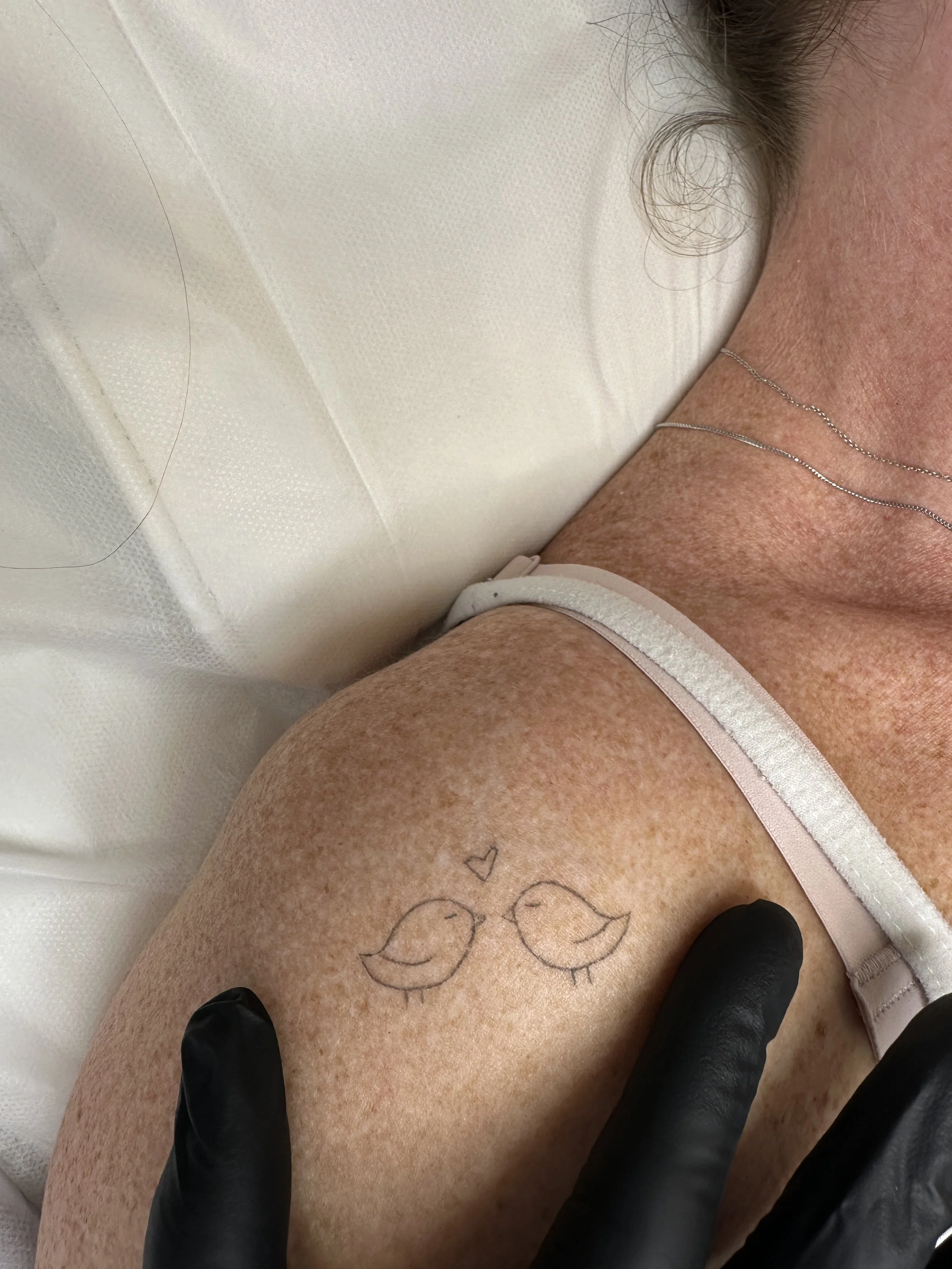
Make it stand outThis fine line tattoo healed perfectly
with no need for a touchup, but it may need some maintenance in the coming years.
Why Touch-Ups Happen
Everyone's skin is different, and it heals in its own way. Some clients' skin holds fine line ink beautifully on the first try and never needs a single touch-up. Others might have a few small areas — maybe where the skin is thinner, or where healing was slightly uneven — that benefit from a little extra refinement.
This isn't about your artist's skill. It's about biology. Skin type, aftercare, lifestyle, and even things like sun exposure or friction from clothing can all affect how a fine line tattoo settles in.
Once your tattoo is fully healed (typically around 4 to 6 weeks), it becomes much easier to see exactly how it settled and whether any areas would benefit from a touch-up. Many clients never need one. Others might have just a few tiny spots that need a little attention. Either outcome is completely normal.
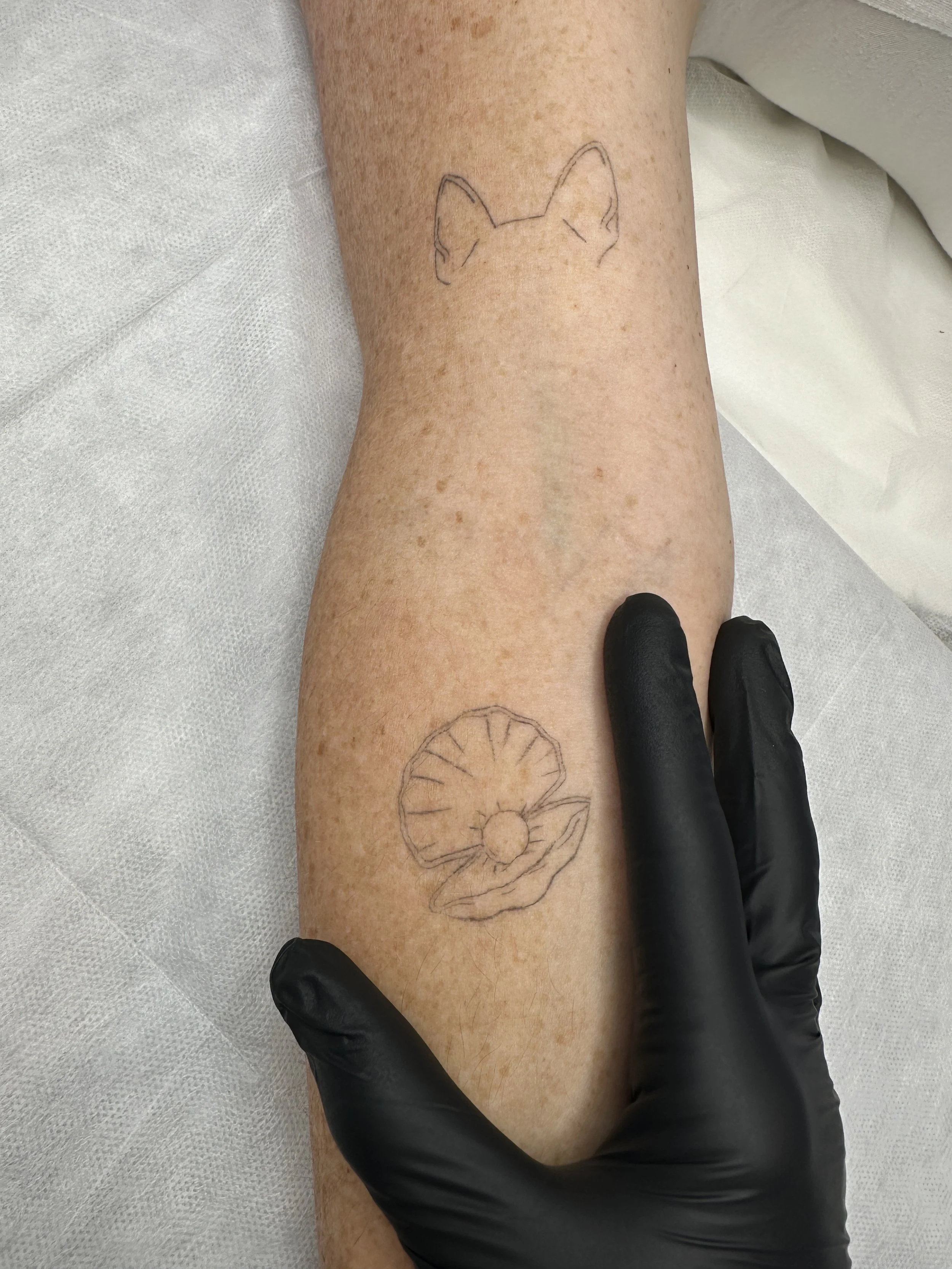
This shell and dog ears healed almost perfectly
with just a few places that needed reinforsing
Why Not Just Tattoo Deeper the First Time?
You might be wondering: if some lines fade or need refinement, why not just go deeper or pack in more ink from the start to avoid that altogether?
Here's the honest answer: I could. But it would come at a cost.
Tattooing deeper or overworking the skin to force darker, more saturated lines significantly increases the risk of:
Blowouts — where ink spreads under the skin, creating blurry, smudged lines
Thicker, heavier lines — losing the delicate, hairline quality that makes fine line tattoos so beautiful in the first place
Long-term damage to the skin — trauma that can affect how the tattoo (and the skin itself) ages over time
In other words, rushing to make a tattoo look "finished" on day one often sacrifices the quality of how it looks five, ten, or twenty years down the road.
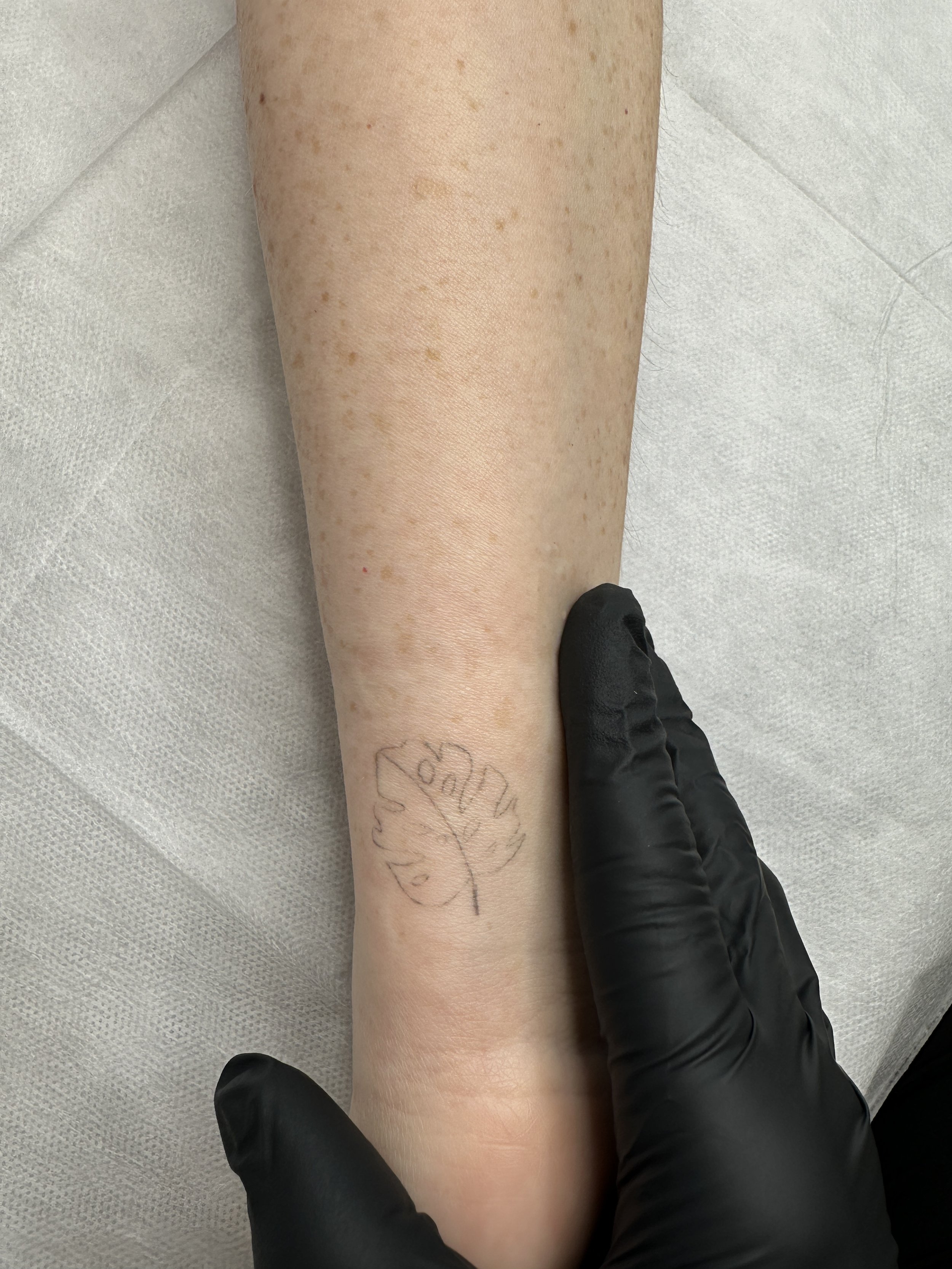
This tattoo did not heal as well and needs the most work.
This is the perfect example of why the wrist is one of the placements that I almost always expect a touchup to be needed.
Wrists usually do not retain ink as well as other places on the body. This client is also a nurse and is constantly washing her hands. She also has an allergy to second skin and was not able to keep it on as long as the recommend 2-3 days, so this was not a surprise to me.
My Approach: Long-Term Beauty Over Instant Results
My priority has always been creating tattoos that heal beautifully over time — not rushing the process for immediate darkness or instant gratification. A tattoo that looks perfect the day you leave the studio but blows out or fades unevenly within a year isn't actually a win. A tattoo that heals cleanly, ages gracefully, and still looks crisp years later is.
That's why I approach every fine line tattoo with patience and precision, and why I build touch-ups into the process as a normal step rather than treating them as a failure to fix.
The Bottom Line
Healing is unique to every person and every tattoo
Touch-ups are a normal, expected part of the fine line process — not a red flag
Every tattoo is approached with long-term results in mind, not just how it looks on day one
If you're considering a fine line tattoo, know that the process is designed to give you the best possible result — even if that means a small refinement once you've fully healed. It's not a shortcut skipped or a mistake made. It's part of doing it right.